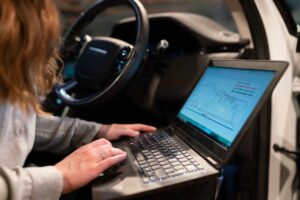
As cars evolve into fully connected, software-driven machines, cybersecurity has become one of the most urgent challenges in Japan’s mobility sector. Modern vehicles now contain millions of lines of code, multiple wireless interfaces, cloud connectivity, OTA updates, and autonomous-driving software. This complexity has opened the door to new cyber risks—pushing Japanese automakers to accelerate investment in AI-powered automotive cybersecurity.
Why Automotive Cybersecurity Is Now Critical
With connected cars, EVs, and autonomous systems expanding rapidly across Japan, threats are no longer theoretical. Vehicles can be targeted through:
- Remote exploits via infotainment systems
- Attacks on OTA update channels
- Sensor spoofing to mislead ADAS / autonomous systems
- Charging station vulnerabilities
- Cloud-based telematics hijacking
AI is becoming essential because human monitoring alone cannot keep up with:
- Massive real-time data streams from vehicle networks
- New attack vectors created by SDVs
- Higher integration between cloud, edge, and embedded systems
AI-driven cybersecurity solutions can monitor, detect, and respond to threats faster than traditional systems.
How AI Strengthens Vehicle Cyber Defense
Japanese OEMs are implementing AI in several key areas:
1. Intrusion Detection Systems (IDS) for CAN & Ethernet Networks
AI analyzes CAN bus behavior, identifies anomalies, and blocks suspicious commands before they affect braking, steering, or safety systems.
2. Predictive Threat Detection
Machine learning models detect abnormal patterns across fleets, enabling OEMs to respond before attacks spread.
3. Cloud-to-Vehicle Security Analytics
AI correlates telematics, mobility data, and system logs to pinpoint vulnerabilities and potential breaches.
4. Secure OTA Updates
AI verifies firmware integrity, monitors update behavior, and detects tampering attempts.
5. Protecting Autonomous Driving Systems
AI identifies sensor spoofing (e.g., LiDAR interference, GPS manipulation) and ensures safe fallback operations.
Japan’s Regulatory Push
Regulations such as UN R155 (Cybersecurity Management System) and R156 (Software Update Management System) are now mandatory for new vehicle types.
Japan’s Ministry of Land, Infrastructure, Transport and Tourism (MLIT) is enforcing alignment with global standards, requiring manufacturers and suppliers to demonstrate traceable cybersecurity processes.
This regulatory shift is reshaping the entire recruitment landscape.
Talent Demand: The New Cyber Workforce for Japan’s Auto Sector
Cybersecurity has become one of the most talent-scarce domains in Japan’s automotive ecosystem. Companies urgently need:
- Automotive Cybersecurity Engineers
- AI Security Analysts
- Vehicle Intrusion Detection Specialists
- Cloud Security Architects (Automotive telematics)
- SOC Engineers for Mobility Systems
- Embedded Security Engineers (secure ECUs & bootloaders)
- Red Team / PenTest Engineers specializing in automotive systems
Key skills include:
- Knowledge of CAN, LIN, automotive Ethernet
- Experience with ML-based anomaly detection
- Familiarity with ISO/SAE 21434
- Threat modeling for ADAS/AD software
- Cloud security for connected mobility platforms
Recruitment Trends in Japan
Automakers, Tier-1 suppliers, and mobility tech companies are shifting their hiring approach:
- Recruiting cybersecurity talent from finance, defense, and cloud industries
- Hiring software engineers and reskilling them in automotive security
- Building in-house SOC (Security Operations Centers) for mobility platforms
- Increasing collaboration with cybersecurity start-ups
- Offering hybrid and remote security roles to access global talent
This is becoming one of the highest-priority hiring areas for 2025–2030.
Why This Matters for Japan’s Mobility Future
Without strong cybersecurity, advances in EVs, connected vehicles, and autonomous driving cannot scale safely.
AI-driven protection is now essential not only for safety, but for customer trust and regulatory compliance.
For job seekers, this field represents one of the fastest-growing, highest-paying, and most future-proof career paths in mobility and IT.
For companies, winning the cybersecurity race will determine competitiveness in the coming decade.