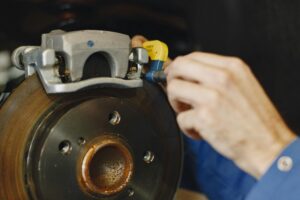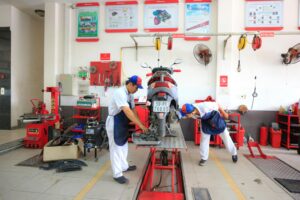
Japan’s automotive industry has long been admired for its meticulous craftsmanship and commitment to perfection—values that have built global trust in brands like Toyota, Honda, and Nissan. Yet, even this legacy of “monozukuri” (craftsmanship) is being reshaped by artificial intelligence (AI). As vehicles become more complex and production lines more digitalized, AI-driven quality control (QC) systems are emerging as the cornerstone of next-generation manufacturing.
From Human Inspection to Intelligent Automation
Traditionally, quality control relied on experienced technicians visually inspecting every component and assembly stage. However, with thousands of parts per vehicle and shrinking production timelines, human inspection alone is no longer sustainable. AI has stepped in to augment human expertise with machine precision.
Using computer vision and deep learning, AI systems now detect microscopic defects—paint imperfections, weld inconsistencies, or assembly misalignments—that even the most skilled human eyes might miss. These systems continuously learn from new data, improving their accuracy over time and reducing false positives that once slowed production.
Predictive and Adaptive Quality
AI doesn’t just spot defects—it predicts them. By analyzing data from sensors, cameras, and machines across production lines, AI can identify subtle performance deviations that often precede equipment failure or quality degradation. Manufacturers can now intervene early, preventing costly rework or recalls.
For example, Toyota has been experimenting with AI-based predictive maintenance systems that analyze vibration and temperature data from assembly robots. This allows engineers to schedule maintenance before any breakdown occurs, keeping production smooth and efficient.
Data Integration Across the Supply Chain
One of AI’s most powerful contributions lies in unifying data silos. By connecting suppliers, manufacturing plants, and quality assurance teams through a shared data ecosystem, AI enables end-to-end visibility. This transparency ensures that even small anomalies in upstream processes can be identified before they impact final vehicle quality.
With Japan’s increasingly globalized supply chain, such integration helps automakers maintain consistent quality standards across regions—from Yokohama to Bangkok to Detroit.
Enhancing Human Roles
AI doesn’t replace Japan’s skilled workforce—it empowers it. Engineers can now focus on root-cause analysis and process optimization rather than repetitive inspection. Augmented reality (AR) and AI-powered guidance systems assist workers in real-time, reducing error rates while maintaining traditional craftsmanship values. This balance of human skill and AI intelligence is redefining what “quality” means in the age of Industry 4.0.
Demand for AI Talent
As AI-driven quality systems become mainstream, automakers are rapidly expanding recruitment in AI-related fields. Key roles include:
- Computer Vision Engineers – for visual inspection and defect detection models.
- Data Scientists – for predictive analytics and manufacturing optimization.
- AI Systems Integrators – to connect sensors, robots, and cloud platforms.
- Machine Learning Operations (MLOps) Engineers – to deploy and monitor AI models at scale.
Fluency in both Japanese manufacturing principles and advanced AI frameworks (TensorFlow, PyTorch) is now a top asset for professionals aiming to thrive in this new manufacturing ecosystem.
Looking Ahead
AI is transforming Japan’s reputation for precision into something even greater—adaptive excellence. In the coming years, AI will not only ensure consistent quality but also drive continuous learning across production networks. For companies, investing in AI-based quality assurance means stronger resilience, higher productivity, and global competitiveness. For professionals, it opens a pathway to the frontier where tradition meets technology.