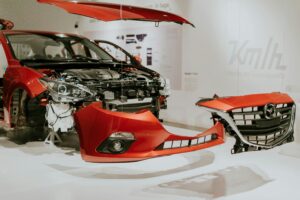
For decades, Japan’s automotive industry has been synonymous with quality. “Kaizen” and “Monozukuri” have shaped the country’s global reputation for precision, reliability, and craftsmanship. Yet even this legacy of excellence is entering a new era—driven by artificial intelligence. AI-powered quality control (QC) systems are revolutionizing how Japan’s automakers inspect, detect, and improve production, ensuring that every vehicle meets the highest standards of safety and performance.
From Manual Inspection to Machine Intelligence
Traditional QC methods relied heavily on skilled workers performing visual inspections or sample-based checks. While effective, these methods were time-consuming and vulnerable to human error, especially as modern vehicles incorporate thousands of complex components. Today, AI-driven systems—equipped with high-resolution cameras and deep learning models—can analyze every part on the production line in real time.
These systems learn to recognize microscopic defects such as cracks, surface irregularities, or alignment issues that even experienced inspectors might overlook. More importantly, AI doesn’t just detect problems—it identifies patterns, predicting when and where defects are most likely to occur. This predictive capability turns quality control from a reactive process into a proactive one.
Smart Factories, Smarter Quality
Across Japan, leading automakers and suppliers are integrating AI inspection tools into their smart factory ecosystems. Machine vision systems can now monitor welding accuracy, paint thickness, and assembly alignment within milliseconds. Combined with IoT sensors and digital twins, these AI systems continuously refine their accuracy through feedback loops—each new dataset improving future inspections.
This has resulted in dramatic reductions in defect rates and rework costs. For example, AI-driven visual inspection platforms can boost detection accuracy to over 99%, ensuring that quality consistency is maintained even across large-scale production environments.
Sustainability Through Efficiency
AI in quality control is not only about precision—it’s also about sustainability. By minimizing production waste, optimizing energy usage, and preventing large-scale recalls, manufacturers can achieve significant reductions in their environmental footprint. For EV production lines, AI systems can help monitor battery assembly and temperature consistency—critical for both safety and long-term performance.
Japanese automakers are now leveraging these technologies to align with carbon neutrality goals while maintaining competitive manufacturing efficiency.
Human–AI Collaboration on the Factory Floor
Despite the rise of automation, human expertise remains central. AI complements, rather than replaces, Japan’s skilled technicians by handling repetitive inspection tasks and allowing humans to focus on high-level judgment and process improvement. The collaboration between engineers and AI systems enhances the speed, accuracy, and adaptability of quality assurance processes.
This shift also highlights a growing demand for AI operations engineers, data scientists, and robotics integration specialists within the manufacturing sector. Companies increasingly seek bilingual professionals who can bridge the gap between traditional manufacturing culture and cutting-edge AI systems.
The Future of Japanese Precision
AI-driven quality control marks a new chapter in Japan’s manufacturing evolution—where tradition meets technology. As factories become more intelligent, the nation’s long-standing commitment to perfection is being redefined through data, algorithms, and human–AI synergy.
The result? Vehicles that are not only meticulously crafted but continuously improved—embodying the next generation of Japanese precision.