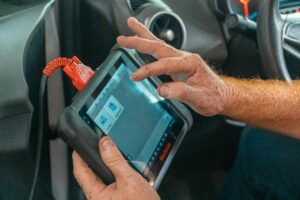
From Hardware to Software: A Paradigm Shift
For over a century, cars have been defined by their hardware—engines, transmissions, and steel frames. But today, a new paradigm is emerging: the software-defined vehicle (SDV). These are cars where core functions—from infotainment to battery management, and even driving dynamics—are controlled and updated through software. Tesla pioneered this model with over-the-air (OTA) updates, and now Japanese automakers are accelerating their transition toward SDVs to remain globally competitive.
This transformation is not just about adding apps to cars. It represents a fundamental re-architecture of vehicles, where software can continuously improve performance, enable new features, and extend vehicle lifecycles. For Japan’s auto industry, it is a once-in-a-generation shift requiring massive investment in IT, cloud platforms, and digital talent.
Why SDVs Matter for Japan
Japan’s automakers face increasing pressure from global EV startups and tech companies entering mobility. By embracing SDVs, they can:
- Deliver continuous innovation: OTA updates allow cars to evolve long after purchase.
- Reduce recalls and costs: Many issues can be fixed remotely through software patches.
- Unlock new revenue streams: Subscription services, app ecosystems, and personalized upgrades.
- Integrate with smart cities: Cars become part of connected infrastructure, communicating with homes, roads, and grids.
Japan’s strong legacy in manufacturing excellence is now converging with software innovation, creating both opportunities and challenges.
Challenges in the Transition
Shifting from hardware-centric to software-driven development is not easy. The industry must overcome:
- Legacy systems: Many Japanese OEMs still rely on siloed, hardware-first development processes.
- Talent shortages: A lack of software engineers with expertise in automotive protocols, AI, and cloud integration.
- Cultural shift: Moving from traditional automotive lifecycles (years) to fast-paced software cycles (weeks or months).
- Global competition: Tech giants from the U.S., Europe, and China are racing ahead in SDV innovation.
Recruitment and Skills in Demand
The rise of SDVs is transforming recruitment in Japan’s automotive sector. Demand for software talent is skyrocketing, with a focus on:
- Embedded Software Engineers: Building real-time operating systems (RTOS) and ECU-level applications.
- Cloud Platform Architects: Designing scalable vehicle-to-cloud ecosystems for OTA and data management.
- AI and Machine Learning Specialists: Enabling autonomous driving, predictive maintenance, and personalization.
- Cybersecurity Experts: Protecting software-driven vehicles from hacking and data breaches.
- Agile Project Managers: Leading cross-functional teams in faster, iterative development cycles.
For bilingual professionals, opportunities are especially strong. Japan’s automakers are partnering with global tech firms, meaning talent who can navigate Japanese corporate culture while collaborating internationally is highly valued.
Looking Ahead
Software-defined vehicles are redefining what it means to be an automaker. In Japan, the companies that successfully merge traditional craftsmanship with cutting-edge software innovation will set the pace for the future. For professionals, this marks a historic opening: automotive careers are no longer just for mechanical engineers—they now span cloud computing, AI, cybersecurity, and beyond.
Recruitment companies play a pivotal role in bridging this talent gap, connecting Japan’s automakers with the global software specialists needed to drive the next era of mobility.