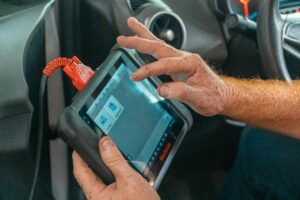
Fleet management is undergoing a major transformation in Japan, driven by the integration of IoT (Internet of Things) technologies. As logistics companies and automotive manufacturers seek greater efficiency, safety, and sustainability, connected vehicles and smart fleet systems are becoming a critical part of business strategy. This shift is not only reshaping logistics operations but also creating new opportunities for IT and mobility professionals in Japan.
The Growing Importance of Fleet Management in Japan
Japan’s economy is deeply dependent on logistics and transportation. With the rise of e-commerce, the aging workforce, and increasing delivery demand, efficient fleet management has become a top priority for logistics operators. The automotive sector, closely tied to logistics, is also evolving—manufacturers are working with software providers and IT specialists to optimize fleet performance, reduce downtime, and minimize emissions.
Globally, fleet management is projected to exceed USD 60 billion by 2030, with Asia-Pacific representing the fastest-growing region. Japan, with its advanced automotive sector and high logistics demand, is expected to play a leading role in adopting IoT-based solutions.
How IoT is Changing Fleet Operations
IoT allows vehicles, sensors, and cloud systems to communicate in real time. For fleet managers, this means:
- Predictive maintenance: Vehicles can alert managers before mechanical issues occur, reducing costly breakdowns.
- Route optimization: Data-driven analysis helps find the fastest and most fuel-efficient delivery routes.
- Driver monitoring: Wearables and onboard sensors can track fatigue, ensuring safety.
- Fuel and energy efficiency: Real-time monitoring enables better fuel management, critical for both ICE and EV fleets.
- Regulatory compliance: Digital logs and automated reporting help meet Japan’s strict transport regulations.
For Japan’s logistics-heavy industries, these benefits directly address current challenges such as driver shortages, rising fuel prices, and the push toward carbon neutrality.
Japanese Case Studies: Automakers and Logistics Innovating Together
Several Japanese companies are already pioneering IoT-enabled fleet management:
- Toyota Connected Japan: Developing fleet telematics platforms that integrate vehicle data with AI-driven analytics to support corporate fleets and car-sharing services.
- Nippon Express: Utilizing IoT-based tracking for international cargo, ensuring real-time visibility across supply chains.
- Isuzu Motors: Collaborating with logistics firms to introduce connected truck services that optimize cargo loads and reduce delivery times.
- Yamato Holdings: Experimenting with IoT and AI-driven route optimization to cope with labor shortages in parcel delivery.
These examples show that Japan is not just adopting IoT but also tailoring solutions to its unique business environment, where customer service expectations are high and operational margins are tight.
Global Comparisons and Lessons for Japan
Japan is not alone in this transformation. In the U.S., Amazon has already deployed large-scale telematics and driver-assist systems to manage delivery fleets. In Europe, regulatory pressure on emissions has accelerated IoT adoption in logistics. Meanwhile, China’s logistics market has aggressively integrated AI and IoT to handle its massive e-commerce volumes.
Compared to these regions, Japan is more cautious in data adoption due to regulatory and cultural concerns around privacy. However, this also means there is growing demand for professionals who can bridge global best practices with Japan’s unique compliance requirements.
Challenges to Overcome
Despite its potential, IoT-based fleet management faces several challenges in Japan:
- Cybersecurity risks: Connected fleets are vulnerable to hacking and data breaches.
- Integration complexity: Legacy fleet systems often struggle to integrate with modern IoT platforms.
- High initial investment: Many small and mid-sized logistics firms hesitate to adopt costly new technologies.
- Workforce adaptation: Drivers and logistics staff must adapt to digital tools, requiring reskilling.
- Standardization issues: With different automakers and IT providers offering varied solutions, interoperability is still limited.
These hurdles highlight the importance of skilled IT professionals who can design secure, user-friendly, and cost-effective solutions.
Impact on Recruitment and Talent Needs in Japan
As fleet management becomes more data-driven, the mobility industry in Japan is experiencing a shift in hiring priorities. Beyond traditional automotive engineering, companies are now looking for:
- IoT specialists: Professionals who can design and manage connected vehicle systems.
- Data analysts: Experts in processing fleet data to optimize routes, fuel efficiency, and predictive maintenance.
- Cybersecurity professionals: Specialists who can secure connected fleets from external threats.
- Bilingual IT project managers: Individuals who can coordinate between Japanese logistics companies and global tech providers.
- AI and machine learning engineers: Developers who can implement predictive algorithms into fleet management platforms.
For bilingual professionals in Japan, this opens an exciting opportunity. Companies increasingly seek talent that not only has technical expertise but also the ability to collaborate across cultures and industries.
Future Outlook: Toward Smarter, Greener Mobility
Looking ahead, fleet management in Japan will be shaped by three major trends:
- Electrification: With EV adoption accelerating, fleet managers will need to balance charging infrastructure and energy efficiency.
- Autonomous driving: Self-driving trucks and delivery vehicles are being tested in Japan, which will rely heavily on IoT connectivity.
- Sustainability goals: Japan’s 2050 carbon-neutral target will push logistics and automotive firms to adopt greener, smarter fleets.
Together, these trends will make IoT not just an option but a necessity.
Conclusion
Fleet management in Japan is at a turning point. The integration of IoT into logistics and automotive industries is transforming operations, improving efficiency, and driving sustainability. At the same time, it is creating new demands for highly skilled IT and mobility professionals. For bilingual candidates, the combination of technical knowledge and cross-cultural communication skills will be especially valuable.
As Japan continues to modernize its logistics and automotive sectors, IoT-based fleet management will be a key growth driver. For both companies and professionals, the future of mobility in Japan is becoming more connected, intelligent, and opportunity-rich.